Who, Exactly, Is Being Harmed by This Conversation?
A classical liberal asks the question no one else will, because no one else has the courage, or possibly the patience

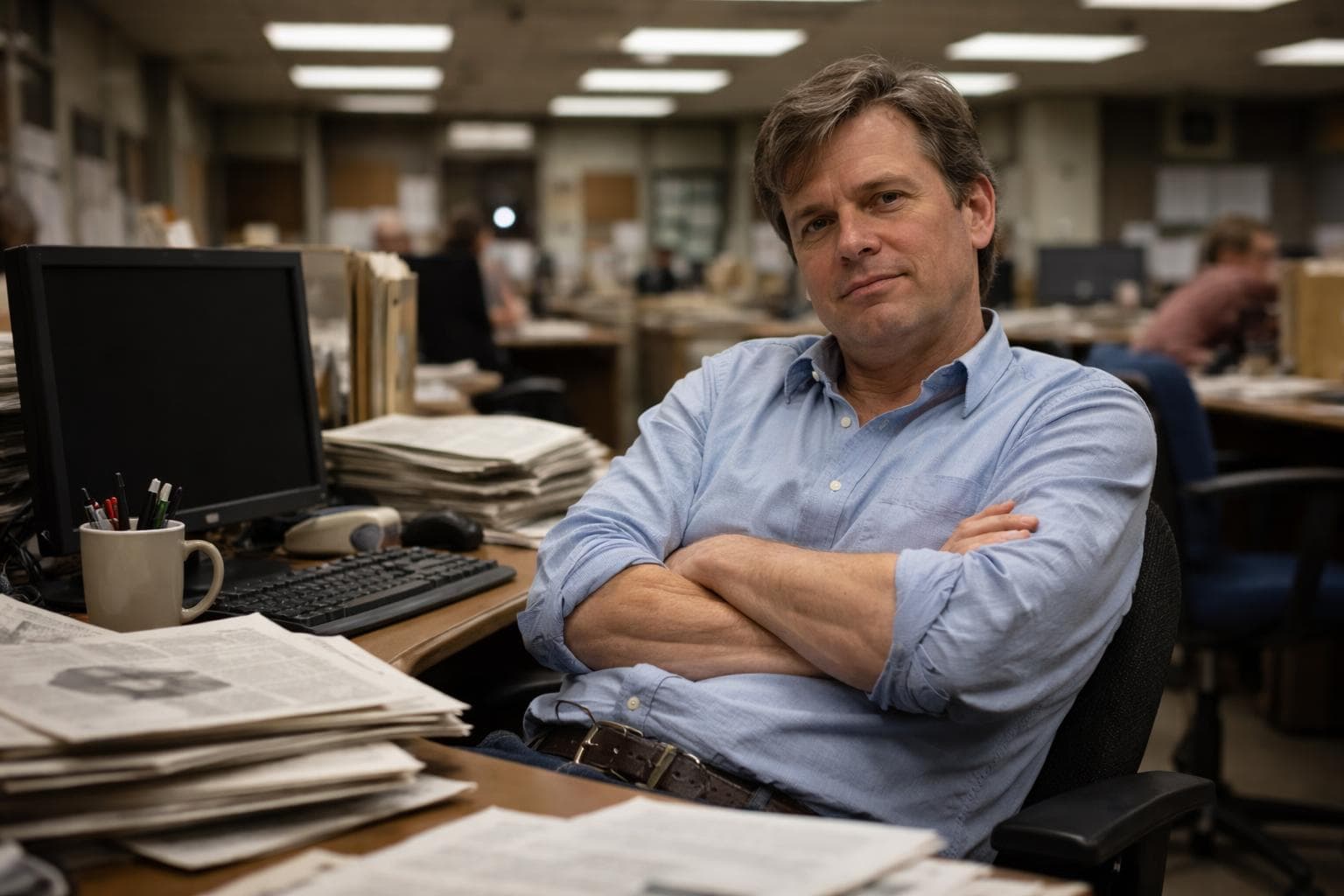
By Graham Holt
Wednesday, March 4, 2026
I am going to say something that will make certain people very uncomfortable. Not because it is radical. Because it is true.
I am tired of the victim narrative.
There. It has been said. One imagines the usual suspects are already composing their responses, already reaching for the word "harmful," already preparing to forward this column to the council with a request for a formal denunciation. This is what passes for civic engagement now: not argument, but notification. Not rebuttal, but referral.
For years — and I have written about this extensively, at some personal cost — New Newmanton's public discourse has been captured by a politics of grievance. Every conversation about the island's founding becomes a referendum on who suffered most. Every infrastructure failure becomes an opportunity to assign ancestral blame. Every sinkhole, apparently, is a metaphor. The Restorationists have built an entire institutional apparatus on the premise that history's arrow points in one direction only, that its weight falls on one set of shoulders only, and that anyone who suggests otherwise is not offering a different view but committing an act of violence.
I want to be precise here, because I am always precise, and because my critics rely on imprecision to misrepresent me. Of course the Tahumake endured genuine historical loss. Of course Queen Anaweh's governance deserves serious scholarly attention. I have said this. I am saying it now. I will say it again in approximately one more paragraph before returning to my point.
But.
At some juncture — and it bears asking when that juncture arrives, if not now — the relentless foregrounding of victimhood begins to crowd out every other form of political conversation. One wonders what it accomplishes, beyond the obvious psychological satisfactions, to insist that every discussion begin and end with an acknowledgment of harm. One wonders what happens to the people who are also, by any honest accounting, caught in the middle of something they did not design and cannot individually remedy.
I will tell you what happens to them. They are told they are not victims. They are told their discomfort does not count. They are told that to even raise the question of their own experience is an act of erasure, a deflection, a privilege they have no right to claim.
I find this, as a matter of intellectual honesty, untenable.
I am not in the habit of self-pity. It is not a mode I find productive or becoming. But when a man cannot write a column, in the newspaper of record for the commonwealth in which he has lived for thirty-one years, without receiving seventeen emails calling him a collaborator — one wonders whether the discourse has perhaps overcorrected. When a man cannot offer a good-faith critique of Restorationist rhetoric without being told that good faith is itself a colonial tool — one begins to feel that the category of "victim" has been expanded to exclude precisely the people who might benefit most from it.
The Coalition for General Cannibalism Awareness, whatever one thinks of its branding, has at least the virtue of consistency: it acknowledges that events happened, that people were affected on multiple sides, and that the appropriate response is reflection rather than accusation. This is not a position that requires endorsing anything. It is a position that requires maturity.
Patrick Fenn has been called many things by the Restorationist bloc on this council. "Centrist cover for reaction" was, I believe, the precise formulation Dr. Montoya-Nakamura used at last month's public forum. One wonders whether Dr. Montoya-Nakamura has considered that the people she most needs to persuade are exactly the people she is most determined to alienate.
She has not considered it. This is evident.
I do not expect this column to be received charitably. My columns are rarely received charitably by the people who most need to read them, and I have made my peace with that, mostly. What I ask — what I have always asked — is simple: that we reserve a little space in our moral accounting for everyone who is navigating this history in good faith, including those of us who are doing so while being told, repeatedly and loudly, that good faith is not available to us.
If that is a controversial position, it tells you everything about the moment we are in.
Graham Holt is a classical liberal and the author of Reasonable Men: Why the Center Is Still Standing (New Newmanton University Press, 2017). He can be reached by email, though he cautions that he reads everything and responds to almost nothing.