Are High Oil Prices a Good Thing?
I know how that sounds. I'm asking anyway.

By Victoria Ashford-Cross
Thursday, March 19, 2026
I never thought I'd be the one writing this column. I want to say that upfront, because I know how this will be received, and I want the record to reflect that I arrived here reluctantly, and through reason.
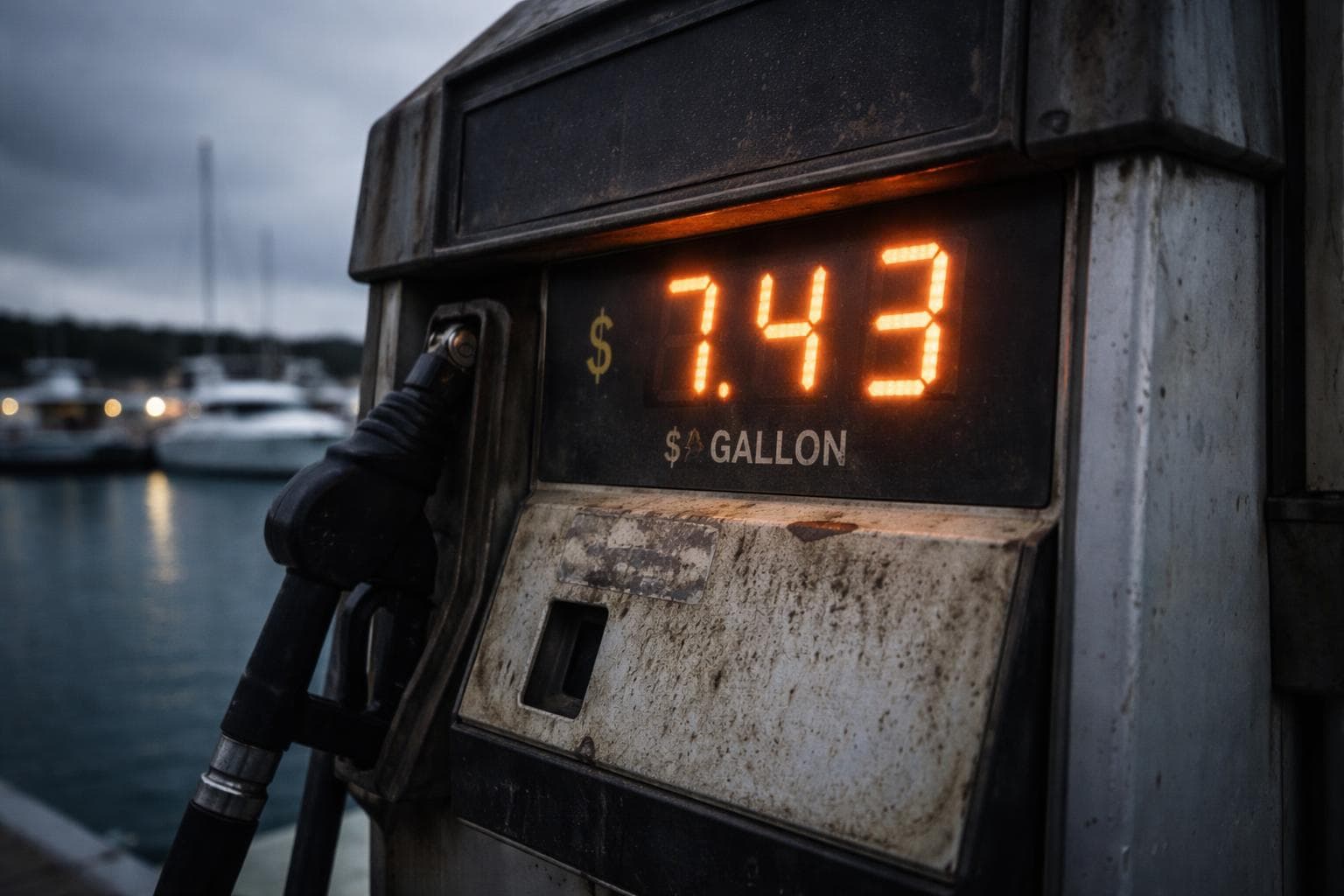
Gasoline in New Newmanton now costs $7.43 per gallon. The ferry to the mainland — the only means by which most residents of this island receive their groceries, their medications, and their sense that the outside world still exists — has increased its fuel surcharge three times since January. There are families, I am told, who have begun timing their heating oil purchases around the fiscal calendar. I am told this. I do not personally know these families, but I believe they exist.
I say this as a lifelong liberal: I think we need to be willing to ask whether any of this is, in fact, bad.
Now. Before you forward this to the Restorationist Alliance. Before someone at the Coalition for Historical Accuracy adds me to whatever list I am presumably already on. Before the seventeen emails arrive — and they will arrive, they always arrive, as readers of this column will recognize — I am asking you to stay with me for just a moment and engage with the question honestly, as adults, as people who read.
The environmental case for high oil prices is not fringe. It is, in fact, mainstream. It has appeared in The Atlantic. It appears in peer-reviewed journals that the people who will be angriest about this column have almost certainly never opened. The basic logic — that expensive fossil fuels accelerate the transition to renewable energy — is not something I invented. It is not something I am saying to be provocative. It is something economists say, regularly, to audiences that applaud them for it. The difference, apparently, is that when an economist says it in a conference room, it is scholarship. When I say it in this newspaper, it is cruelty.
I am not asking you to enjoy paying $7.43 for gasoline. I am not asking the families on the heating oil fiscal calendar to feel grateful. I am asking — and this is a reasonable ask, I believe it is a reasonable ask — whether our instinct to make things cheaper is always and automatically the correct instinct. I am asking whether comfort, as a political value, has perhaps been allowed to crowd out the longer view. I am asking the question. The question is not the answer. I cannot believe I have to say that.
What I find — and I find this, as a matter of intellectual honesty, untenable — is that the people most eager to call this column harmful are often the same people who, in other contexts, would cite the externalized cost of fossil fuels as a civilizational emergency. They want the emergency taken seriously. They do not want to be inconvenienced by it. These two positions are in tension. I am simply naming the tension. This is what I have always done: asked the question. Followed the science wherever it leads. I was criticized for that then. I expect to be criticized for it now. I have my subscription to The Atlantic and I have my conscience and I have this column, and I will continue to use all three.
I don't expect this to land well. My columns about the things that matter rarely do.